 |
| WORKSHOP 2 |
|
 |
| . |
|
|
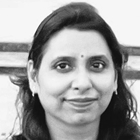
Bharti
CFEES - DRDO, India
Invited – Workshop 2: 2DM Chemistry and composites
Synthesis of graphene based nano composite for removal of toxicants from water
|
|
|
|
|
 |
| KEYNOTE |
|
|
| . |
|
|
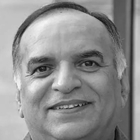
Rajeev Ahuja
Indian Institute of Technology (IIT) Ropar, India
Keynote – Plenary Session
Prof. Rajeev Ahuja is a professor of computational Materials science at Uppsala University, Sweden. Currently, he is serving as the Director of Indian Institute of Technology (IIT) Ropar, India. He was also holding the additional charge of director of IIT Guwahati, India from Nov. 2023 to May 2024. He is one of the most highly cited researchers as well as top 5 materials scientist in Sweden and India. He has done his Ph.D. from IIT Roorkee in India in 1992. Same year, he joined Uppsala University, Sweden as postdoctoral fellow. He became Professor in 2007 at Uppsala University, Sweden. His main area of interest is materials science with focus on energy such Batteries, Hydrogen Storage & production, sensors as well high-pressure physics.
He has published more than 1200 scientific papers in peer reviewed journals H-Index of 111, i-10 index 867 & no. of citations more than 57000. Prof. Ahuja has supervised 30 PhD students, more than 35 post-docs. He has recently elected as the Fellow of the Royal Society of Chemistry (F-RSC), UK, and as an APS Fellow by the American Physical Society (APS), USA. He serves on the advisory board of the Journal of Materials Chemistry A and Materials Advances from the Royal Society of Chemistry. Additionally, he is the Associate Editor of Nano Energy.
Prof Ahuja has received several prestigious awards, including the Beller Lectureship at the APS March Meeting in 2017, the Wallmark Prize in 2011 from the Royal Swedish Academy of Sciences (KVA), Sweden and the Eder Lilly & Sven Thureus Prize, as well as the Benzelius Prize from the Swedish Royal Society of Sciences (KVS), Sweden. He is an elected member of the Swedish Royal Society of Sciences (KVS). Prof Ahuja has been awarded Best Alumnus award from IIT Roorkee, India for excellence in research for 2021.
|
|
|
|
|
 |
| PLENARY |
|
|
| . |
|
|
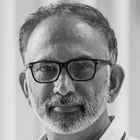
Pulickel Ajayan
Rice University, USA
Plenary Talk
Pulickel M. Ajayan has worked in the area of nanotechnology for nearly three decades. He has published more than 1300 journal papers earning more than 240,000 citations and h-index of 240 (by google scholar). His work covers diverse areas of nanomaterials including nanoparticles, nanotubes, diamond, 2D materials, nanocomposite, energy storage materials and 3D printing. He is the Benjamin M. and Mary Greenwood Anderson professor of Engineering at Rice University and the founding chair of the department of Materials Science and NanoEngineering. He is the recipient of awards such as the Spiers memorial award, MRS medal, Alexander von Humboldt-Helmoltz senior award, and lifetime nanotechnology award from the Houston Technology Center. He received Docteur Honoris Causa from the Universite Catholique de of Louvain and distinguished alumni recognition from his Alma Mater Banaras Hindu University and the Materials Science department at Northwestern University.
|
|
|
|
|
 |
| WORKSHOP 5 |
|
|
| . |
|
|
Surendra Babu Anantharaman
IIT Madras, India
Invited – Workshop 5: Photonics, Plasmonics, Phononics, 2D Magnetism and Spintronics
Surendra B. Anantharaman has been an Assistant Professor in the Department of Metallurgical and Materials Engineering, Indian Institute of Technology Madras since May 2023. His current research focuses broadly on strong light-matter interactions, light-emitting devices, energy harvesting systems, and spin/charge injection in perovskite optoelectronic devices.
Before joining IIT Madras, he was a Group Leader for Perovskite Optoelectronics division at AMO GmbH, Aachen, Germany and Postdoctoral Researcher at the University of Pennsylvania, USA. He investigated exciton-polariton dynamics upon strong light-matter coupling without an external cavity from two-dimensional (2D) perovskites, transition metal-dichalcogenides, and emerging 2D hybrid materials. He received his Ph.D. from the Swiss Federal Institute of Technology Lausanne (EPFL), Switzerland, in 2019 on “Exciton Dynamics in 2D Organic Assemblies for Realization of Next-Generation Optoelectronic Devices”. He also had a stint working with Taiwan Semiconductor Manufacturing Company (TSMC), Taiwan, in the Thin Films Division before joining the Ph.D. program.
|
|
|
|
|
 |
| KEYNOTE |
|
|
| . |
|
|
Peter Boggild
DTU Physics, Denmark
Keynote – Plenary Session
Peter Bøggild is professor and group leader at DTU Physics at the Technical University of Denmark. He obtained his PhD in low temperature solid state physics at the Copenhagen University in 1998, and became a full professor in 2013 at DTU. He has worked across numerous areas, including nanomechatronics/robotics, topology optimization, nanometrology, nanotubes/nanowires, surface science, material synthesis and microfabrication, mesoscopic physics and simulations, but is today is leading a group entirely focusing on graphene and other 2D materials, with emphasis on large scale fabrication/applications, electronics, terahertz metrology and material science. He has published nearly 200 papers, most of which are on 2D materials, and is committed to push fundamental research in two-dimensional materials towards real and viable technologies and applications. He is main organizer of the international conference Carbonhagen, which has run annually since 2010, latest in 2020 as an online meeting.
|
|
|
|
|
 |
| WORKSHOP 8 |
|
|
| . |
|
|
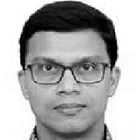
Ayan Roy Chaudhuri
Indian Institute of Technology Kharagpur, India
Invited – Workshop 8: Growth, Synthesis Techniques and Integration Methods
Dr. Ayan Roy Chaudhuri is an associate professor at the Materials Science Centre, Indian Institute of Technology Kharagpur. He earned his Ph.D. degree (Integrated Ph.D., Chemical Sciences) from the Indian Institute of Science Bangalore in 2009, where he was affiliated with the Materials Research Centre. Dr. Roy Chaudhuri received the prestigious Alexander von Humboldt Fellowship for post- doctoral research to work on nanoengineering of funcional oxide thin films at Max Planck Institute of Microstructure Physics in Halle (Saale). He worked as a senior research scientist at the Institute of Electronic Materials and Devices at Leibniz University in Hannover, Germany, where he worked extensively on MBE growth of epitaxial lanthanide oxides on Si for high k dielectric applications. Since January 2016, Dr. Roy Chaudhuri has been working as a faculty member of IIT Kharagpur. In 2017, he received the faculty excellence award of IIT Kharagpur for his contribution to teaching, research, and institute administrative works.
|
|
|
|
|
 |
| KEYNOTE |
|
|
| . |
|
|
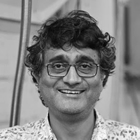
Mandar M. Deshmukh
TFIR, India
Keynote – Plenary Session
Mandar has been a researcher at TIFR for 20 years, and his current interests are in studying the physics of Josephson junctions and the topological properties of van der Waals materials.
|
|
|
|
|
 |
| WORKSHOP 7 |
|
|
| . |
|
|
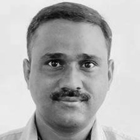
Rupesh S. Devan
Indian Institute of Technology Indore, India
Invited – Workshop 7: Energy Applications of 2D Materials
Dr. Rupesh S. Devan is a Professor (since Oct. 2023) in the Department of Metallurgical Engineering and Materials Science at IIT Indore. He has received the MRSI Medal 2025, DUO-India Professor Fellowship (DST India, and ASEM-DUO S. Korea, 2020-22), INSPIRE Faculty Award (DST India), Best Technology Award-2025 (IIT Indore), and Best research paper award -2023 (IIT Indore). His research focuses on the development of MAX phase, MXenes, and nano-hetero-architectures for energy storage/conversion applications, including green hydrogen generation, solar supercapacitors, hybrid supercapacitors, and water desalination.
|
|
|
|
|
 |
| WORKSHOP 5 |
|
|
| . |
|
|
Gopal Dixit
IIT Bombay, India
Invited – Workshop 5: Photonics, Plasmonics, Phononics, 2D Magnetism and Spintronics
Gopal Dixit is an Associate Professor at the Indian Institute of Technology (IIT) Bombay. He has served as a Visiting Professor and Scientist at Stanford University USA, University of Lorraine France, University of Tsukuba Japan, and the Max Planck Institute in Dresden Germany. His research focuses on ultrafast spectroscopy and light-matter interaction in quantum materials, which bridges attosecond physics, quantum materials, and nonlinear optics. His work includes pioneering contributions to attosecond electron dynamics and lightwave valleytronics in pristine graphene. His work has been widely covered in media outlets including Forbes USA, MIT Technology Review, NBC News, IEEE, and Neue Zürcher Zeitung. His research has also featured in major Indian platforms such as The Hindu, DD News, Times of India, and Rajya Sabha TV
|
|
|
|
|
 |
| INDUSTRIAL FORUM |
|
|
| . |
|
|
Dorye Esteras
ICN2/Apeiron Intelligence, Spain
Invited - Industrial Forum
Dr. Dorye L. Esteras is a physicist specializing in computational nanoscience and atomic-scale simulations of advanced materials. He holds a PhD in Nanoscience and Nanotechnology, with research focused on first-principles simulations of two-dimensional (2D) magnetic materials using density functional theory (DFT). His work addresses the electronic structure and magnetism of quantum materials, as well as the development of simulation workflows for high-throughput research. He is actively involved in the development of advanced simulation and data-driven software for materials discovery at Apeiron Intelligence.
|
|
|
|
|
 |
| KEYNOTE |
|
|
| . |
|
|
Andrea Ferrari
Cambridge Graphene Centre / University of Cambridge, UK
Keynote – Plenary Session
Andrea C. Ferrari earned a PhD in electrical engineering from Cambridge University, after a Laurea in nuclear engineering from Politecnico di Milano, Italy. He is Professor of Nanotechnology and the Director of the Cambridge Graphene Centre and of the EPSRC Centre for Doctoral Training in Graphene Technology. He is Fellow of Pembroke College, the American Physical Society, the Institute of Physics and the Materials Research Society. His research interests include nanomaterials growth, modelling, characterization, and devices. He was awarded the Royal Society Brian Mercer Award for Innovation, the Marie Curie Excellence Award, the Philip Leverhulme Prize, The EU-40 Materials Prize, The Royal Society Wolfson Research Merit Award. He is also the Chairman of the Executive Board of the EU Graphene Flagship
|
|
|
|
|
 |
| WORKSHOP 1 |
|
|
| . |
|
|
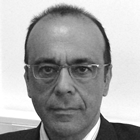
Monica Focsan
Babes-Bolyai University, Romania
Invited – Workshop 1: Sensors and Biomedical Applications
Monica Focsan, PhD (2010) and Habilitation (2019), is an Associate Professor at the Faculty of Physics and a Senior Scientific Researcher Grade I at the Nanobiophotonics and Laser Microspectroscopy Center, within the Interdisciplinary Research Institute in Bio-Nano-Sciences (ICI-BNS), Babeș-Bolyai University, Romania. She is also Vice Director of ICI-BNS. Her research focuses on nano(bio)photonics, with expertise in the synthesis and characterization of versatile plasmonic and graphene-based hybrid nanostructures, as well as polymeric nanoparticles with controlled morphologies for molecular (bio)sensing, (bio)imaging, and therapeutic applications. With over 130 publications, several patents, and recognitions such as the L’Oréal–UNESCO “For Women in Science” Fellowship and the Constantin Miculescu Prize of the Romanian Academy, she contributes actively to the advancement of interdisciplinary nanoscience research.
|
|
|
|
|
 |
| INVITED |
|
|
| . |
|
|
Costas Galiotis
FORTH/ ICE-HT and University of Patras, Greece
Invited – Plenary Session
Costas Galiotis is the Principal Investigator (PI) of the ERC Advanced – Tailoring Graphene project. He is a Professor at the Department of Chemical Engineering (Univ. of Patras) and former Director of the Institute of Chemical Engineering Sciences (ICE-HT) which is one of the 7 academic research institutions of the Foundation of Research and Technology-Hellas (FORTH). In its over 26 years of operation FORTH/ ICE-HT has developed into a world-leading centre for the advancement of high quality scientific knowledge in the fields of material science and in the computer aided design and simulation of new materials and processes. It comprises of approximately 150 personnel and has a running yearly budget of 5 M€. Prof. Galiotis is also a member of the Board of Directors of FORTH (since July 2007). FORTH has been ranked as the first Research Centre in the field domain in Greece in 3 successive evaluations. Prof. Galiotis had an auspicious term of office as Director of the Institute in the years 2009-2014. Being also the coordinator of the Hellenic participation and national representative of “Graphene” he contributed in establishing the Graphene Center by joining the research forces of three FORTH institutes, ICE-HT, IESL and ICAM. Despite the Country's intense economic situation he expanded the Institute by literally setting the foundations to the Institute's new modern building that will house research laboratories.
|
|
|
|
|
 |
| WORKSHOP 1 |
|
|
| . |
|
|
Dipak Kumar Goswami
Indian Institute of Technology – Kharagpur, India
Invited – Workshop 1: Sensors and Biomedical Applications
Professor Dipak Kumar Goswami is the Dean of the Faculty of Interdisciplinary Sciences and a Professor in the Department of Physics at the Indian Institute of Technology Kharagpur. He leads the Organic Electronics Laboratory (ORELA) and has made pioneering contributions to organic and hybrid electronics, flexible and wearable sensors, neuromorphic devices, and healthcare technologies. His research focuses on translating cutting-edge materials science into real-world applications through intelligent device engineering.
Prof. Goswami has published over 100 international journal papers, holds several patents on advanced organic and hybrid sensor technologies, and has led numerous nationally funded projects in nanoelectronics, healthcare sensing, and semiconductor R&D. His innovations include smart spirometers for COPD detection, IoT-enabled sleep apnea monitors, portable SARS-CoV-2 detection systems, and neuromorphic phototransistors for hardware security, many of which are being commercialized through his startup SenFlex Innovation Pvt. Ltd.
He earned his Ph.D. from the Institute of Physics, Bhubaneswar, followed by postdoctoral research at Northwestern University (USA) and the Max Planck Institute for Solid State Research (Germany). A visiting scientist at the European Synchrotron Radiation Facility (France) and an invited speaker at leading global institutions, Prof. Goswami currently serves as National Coordinator for Nanoelectronics R&D under MeitY, advancing India’s leadership in semiconductor and sensor technologies. His interdisciplinary vision continues to drive innovation at the nexus of materials science, electronics, and healthcare
|
|
|
|
|
 |
| INDUSTRIAL FORUM |
|
|
| . |
|
|
Manju Gunawardana
LOLC, Sri Lanka
Invited - Industrial Forum
Manju Gunawardana counts over 25 years in Research and Innovation in various subject areas, including Nano technology, Advanced Material & Engineering. He started his career as electronics engineer and specialised in military electronics. Mr. Gunawardana has worked in some of Sri Lanka’s leading engineering companies, such as TOS Lanka Co Pvt Ltd and Orange Electric, as a Director Engineering and Head of Research responsible for product development and research management. He served as the CEO at CIC Precision Agriculture (Pvt) Ltd, Head of Research & Innovation at CIC Holdings PLC, and pioneered Precision Agriculture Technologies based on drone applications in Sri Lanka. Mr. Gunawardana has worked as a principal Research Engineer at MAS Holdings, Sabre Technologies, and was responsible for real-time system design. Currently, he is the Group CEO of the Research and Innovation arm of LOLC as well as a Consultant Senior Research Scientist/Director at Sri Lanka Institute of Nano Technology (SLINTEC). Also, his contribution in unveiling Sri Lanka’s pristine graphite to the world is so far remarkable, being the pioneer and founder of Ceylon Graphene Technologies Pvt Ltd (CGTL), Sri Lanka’s first graphene and advanced material company, and he currently serves as CEO/ Director. Mr. Gunawardana is the winner of multiple international awards, including 3 Geneva Innovation Congress Gold Medals and one Silver Medal. He has also twice won the national title as the Best Inventor in Sri Lanka. He is the Chairman of Browns Agri Solutions (Pvt) Ltd. Mr. Gunawardana is also a Director of LOLC Advanced Technologies (Pvt) Ltd, Associated Battery Manufacturers (Ceylon) Limited, Browns Pharma Limited and BI Holdings (Pvt) Ltd, Browns Plantations, and AgStar PLC.
|
|
|
|
|
 |
| WORKSHOP 7 |
|
|
| . |
|
|
Sterlin Leo Hudson
Banaras Hindu University, India
Invited – Workshop 7: Energy Applications of 2D Materials
Dr. Sterlin Leo Hudson is an Assistant Professor in the Department of Physics at the Institute of Science, Banaras Hindu University, Varanasi. His research focuses on materials for green hydrogen production, hydrogen storage, and carbon capture and storage (CCS) applications.
Dr Sterlin Hudson is a Fulbright Fellow, and he served at the National Institute of Standards and Technology (NIST), Washington, D.C., USA, for the development of microporous materials for the selective capture of carbon dioxide from thermal power plants and onboard hydrogen storage systems at ambient conditions in Fuel Cell vehicles. He has contributed to the international round robin experiments on CCS and hydrogen storage conducted by NIST, USA and National Renewable Energy Laboratory (NREL), USA, respectively. He has published over 40 international journal papers and has led nationally and internationally funded research projects.
He earned his Ph.D. in Physics from the Banaras Hindu University, Varanasi, followed by postdoctoral research at NIST, USA. He was also a visiting researcher at Uppsala University, Sweden. His vision is to contribute to R&D to realise the net-zero emissions mission for a sustainable future.
|
|
|
|
|
 |
| INDUSTRIAL FORUM |
|
|
| . |
|
|
PS Jayan
CUMI, India
Invited - Industrial Forum
|
|
|
|
|
 |
| WORKSHOP 4 |
|
|
| . |
|
|
Ashok Keerthi
University of Manchester, UK
Invited – Workshop 4: Nanographenes and related 2D-based nanostructures
|
|
|
|
|
 |
| WORKSHOP 2 |
|
|
| . |
|
|
Anup Kumar Keshri
Indian Institute of Technology Patna, India
Invited – Workshop 2: 2DM Chemistry and composites
Anup Kumar Keshri is currently an Associate Professor in Dept. of Metallurgical and Materials Engineering at Indian Institute of Technology (IIT), Patna, India. His main research interest lies in 2D Materials, surface Engineering, plasma spraying, CNT/graphene reinforced metal and ceramic composite coatings, mechanical, corrosion, and tribological behavior of coatings. He has published 160+ papers in peer-reviewed journals, delivered several invited talks in international conferences, and in industries. He has filed 13 Indian patents, out of which 4 have been granted. His h-index of 41 (total citations close to ~5040) strongly endorses his research productivity. He has received the sponsored research and consultancy funding of ~ 1.92 million USD (~ INR 16+ Crores) from various govt. and private funding agencies. Under his supervision, 9 Ph.D. students and 26 M.Tech. students have already been graduated and 1 Research Associate, 12 Ph.D. and 02 M.Tech. are ongoing. He is a recipient of many awards and honors such as, Research stay grant by Humboldt Foundation, Dissertation Year Fellowship (2009–2010) from FIU, Arthur E. Focke leadership award by ASM Foundation delegate of “President’s Council of Student Advisors (PCSA)” formed by The American Ceramic Society (ACerS). Dr. Keshri also serves as reviewers for several journals in the area of coatings and thermal spray. Recently, one of his works published in ACS Nano has been globally covered by C&EN, Harvard University, The Graphene Council, American Ceramic Society and THEWEEK Magazine and here is the link of the news.
|
|
|
|
|
 |
| INVITED |
|
|
| . |
|
|
Satheesh Krishnamurthy
University of Surrey, UK
Invited – Plenary Session
Satheesh Krishnamurthy is a Professor and the Director of The Surrey Ion Beam Centre is the lead site for the UK National Ion Beam Centre and sits within the Advanced Technology Institute of the University of Surrey. The Ion beam centre caters wide variety of interdisciplinary research using ion implantation, ion irradiation and ion beam analysis from 2D materials to batteries and cell biology.
Professor Satheesh Krishnamurthy FRSC, FIMMM, joined University of Surrey in September 2023, Prior to that he was a professor at The Open University, UK. He earned his Bachelors, Masters in Physics from University of Madras, Chennai, India and Ph.D. in Materials Science and Engineering from University of Newcastle upon Tyne, UK. His Ph.D was sponsored by Overseas Research Scholarship, an award is among the most selective and prestigious awards offered to international students and scholarships are awarded on the basis of academic excellence and research potential by the UK Higher Education Authority. After spending 4 years as a postdoctoral researcher in Trinity College Dublin and further 4 years in Dublin City University. He has more than 100 publications with over 10000 citations. He has delivered more than 150 invtied or plenary talks in leading conferences around the world.
|
|
|
|
|
 |
| WORKSHOP 7 |
|
|
| . |
|
|
Anuj Kumar
GLA University, India
Invited – Workshop 7: Energy Applications of 2D Materials
|
|
|
|
|
 |
| WORKSHOP 5 |
|
|
| . |
|
|
Chandan Kumar
Indian Institute of Science – Bangalore, India
Invited – Workshop 5: Photonics, Plasmonics, Phononics, 2D Magnetism and Spintronics
Chandan Kumar is an Assistant Professor at the Centre for Nano Science and Engineering, Indian Institute of Science (IISc), Bangalore, India (since 2022). He completed his Ph.D. in Physics (2019) at IISc Bangalore. Prior to joining IISc, he was a Postdoctoral Fellow at the Weizmann Institute of Science, Israel (2018–2022) where he studies electron hydrodynamics in graphene devices using scanning single electron transistor. He works broadly on quantum transport, nanoelectronics, and low-temperature physics in van der Waals heterostructures. His research group develops novel scanning methods to probe 2D quantum materials at the nanoscale.
|
|
|
|
|
 |
| INDUSTRIAL FORUM |
|
|
| . |
|
|
Jitender Kumar
TACC Limited, India
Invited - Industrial Forum
Jitender Kumar holds a PhD in Physics with a specialization in Materials Science and has over six years of experience working on graphene-based materials. He began his career in the development of graphene and its spectroscopic characterization and later transitioned into a techno-commercial role focused on industrial adoption. Currently, he is the Strategy and Market Lead at TACC Limited, driving the development and commercialization of graphene and its derivatives. He has demonstrated graphene material use cases in India and globally across applications including construction materials, polymers, paints & coatings, composites, and energy storage devices. His work lies at the intersection of advanced materials R&D, technology translation, and sustainable industrial solutions
|
|
|
|
|
 |
| WORKSHOP 8 |
|
|
| . |
|
|
Pitamber Mahanandia
National Institute of Technology, India
Invited – Workshop 8: Growth, Synthesis Techniques and Integration Methods
Prof. Pitamber Mahanandia is professor in the department of Physics & Astronomy, National Institite of Technology, Rourkela, Odisha, India. Prof. Mahanandia received PhD from the department of Physics, Indian Institute of Science, Bangalore, India. Prof.Mahanandia had postrdoctoral experiences in USA and Germany. Prof.Mahanandia’s academic focus has been at the crossroads of nanotechnology, sustainable engineering devices for energy harvesting and storage and for field effect transistor for high speed electronics. Research accomplishments include creation of novel materials for the benefits of nanomaterials for energy harvesting and storage. Prof.Mahanandia has published more than 60 research papers and secured number of research grants from various funding agencies.
|
|
|
|
|
 |
| KEYNOTE |
|
|
| . |
|
|
Sanjay Mathur
University of Cologne, Germany
Keynote – Plenary Session
Professor Sanjay Mathur is an inorganic chemist, the director of the Institute of Inorganic and Materials Chemistry at the University of Cologne in Germany, and currently acting as a new Editor-in-Chief of Journal of Electroceramics. He brings broad research experience and unique skills to the journal. He is also the Fellow of the European Academy of Science, the Founding Director of the Institute of Renewable Energy Sources at the Xian Jiao Tong University, Xian, China and a World Class University Professor at the Chonbuk University in Korea. He is a Visiting Professor in the Institute of Global Innovation Research at TUAT, Japan and a SPARC Faculty at IIT Madras, India. His research interests focus on application of nanomaterials and advanced ceramics for energy technologies and biomedical applications. He holds 11 patents and has authored/co-authored over 500 original research publications (h-index, 75) and has edited several books. He is an Academician of the World Academy of Ceramics and Fellow of the American Ceramic Society, ASM International and Materials Research Society, USA.
|
|
|
|
|
 |
| INVITED |
|
|
| . |
|
|
James G. McHugh
National Graphene Institute, University of Manchester, UK
Invited – Plenary Session
Dr James G. McHugh is a Dame Kathleen Ollerenshaw Research Fellow at the National Graphene Institute, University of Manchester, and co-theme lead for Theory & Modelling. He develops theoretical models and high-performance computational workflows for layered and van der Waals materials, linking atomistic physics to device-scale functionality, integrating density functional theory with tight-binding and continuum modelling, molecular dynamics, analytical perturbation theory, and equivariant graph neural network models to enable scalable, accurate simulation and analysis. His research interests include stacking- and moiré-control of electronic and magnetic behaviour; defects and internal boundaries, including ferroelectric domain walls and mirror/twistronic twin boundaries; spintronics and exciton physics in transition metal dichalcogenides; and ML-accelerated modelling and theoretical analysis of nanoconfined liquids in layered materials.
|
|
|
|
|
 |
| INVITED |
|
|
| . |
|
|
Titash Mondal
Indian Institute of Technology, Kharagpur, India
Invited – Plenary Session
Dr Titash Mondal is currently serving as an Assistant Professor in the Rubber Technology Centre, IIT Kharagpur. Before joining academia, he worked at Momentive Performance Materials (formerly GE Silicones) on silicone rubber composites. His research focuses on elastomer composite-based flexible/wearable sensors, as well as triboelectric nanogenerators. With over a decade of work on graphene–polymer systems, he has authored numerous high-impact papers, holds international patents, and edited a book. Dr Mondal has received several awards, including the 2025 SPARKS-THOMAS Award from the American Chemical Society (USA) and the Faculty Excellence Award 2024.
|
|
|
|
|
 |
| INDUSTRIAL FORUM |
|
|
| . |
|
|
Kazuo Muramatsu
Incubation Alliance.Inc., Japan
Invited - Industrial Forum
Dr. Kazuo Muramatsu is the CEO of Incubation Alliance, Inc. (InALA), based in Kobe, Japan. He completed his studies in materials science at Toyohashi University of Technology in 1985. During his university years, he conducted research on graphite intercalation compounds and collaborated with Dr. Ralph Setton (CNRS), one of the pioneers of graphene.
He later joined Kobe Steel, Ltd., where he worked on the development of “new carbon” materials using Hot Isostatic Pressing (HIP) equipment, and contributed to the development and commercialization of graphene electrodes for hydrogen generators, carbon substrates for HDDs, and substrates for semiconductor processes.
In 2007, he founded InALA and has since been promoting the development of mass synthesis methods for graphene and the commercialization of Graphene Flower® products.
He earned a doctoral degree from Oita University in 2024. In 2025, he received the Technical Award from the Carbon Society of Japan and the Kondo Memorial Foundation Award from the Kondo Memorial Foundation
|
|
|
|
|
 |
| WORKSHOP 5 |
|
|
| . |
|
|
Narayanan Tharangattu Narayanan
Tata Institute of Fundamental Research-Hyderabad, India
Invited – Workshop 5: Photonics, Plasmonics, Phononics, 2D Magnetism and Spintronics
T N Narayanan is an Associate Professor at TIFR Hyderabad, India. His research interests lie in the areas of low dimensional materials – development and applications. In particular, he is interested in the studies of probing and engineering interfacial phenomena relevant to metal-semiconductor junctions, electrochemical interfaces such as in batteries and electrocatalysis etc. Ten students have already graduated under his guidance and 10 students are currently working with him towards their Ph.D. He has >200 international peer reviewed publications and 5 patents to his credit.
|
|
|
|
|
 |
| PLENARY |
|
|
| . |
|
|
Kostya Novoselov
NUS, Singapore
Plenary Talk
Professor Sir Konstantin ‘Kostya’ Novoselov FRS was born in Russia in August 1974. He has both British and Russian citizenship. He is best known for isolating graphene at The University of Manchester in 2004, and is an expert in condensed matter physics, mesoscopic physics and nanotechnology. He was awarded the Nobel Prize for Physics in 2010 for his achievements with graphene. Kostya is Langworthy Professor of Physics and Royal Society Research Professor at The University of Manchester.He graduated from The Moscow Institute of Physics and Technology and undertook his PhD studies at The University of Nijmegen in the Netherlands before moving to The University of Manchester in 2001. Professor Novoselov has published more than 250 peer-reviewed research papers
|
|
|
|
|
 |
| WORKSHOP 2 |
|
|
| . |
|
|
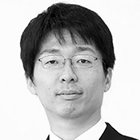
Christian N. Nwosu
University of Manchester, UK
Invited – Workshop 2: 2DM Chemistry and composites
Dr Christian N. Nwosu recently achieved his PhD in Materials (Materials Science and Engineering) from The University of Manchester, United Kingdom, having previously earned an MSc in Applied Nanotechnology from Cranfield University, UK. His PhD research focused on graphene-based materials and graphene nanocomposites, with strong emphasis on industrial translation. He investigates sustainable polymer nanocomposites and graphene-enabled systems with strong potential for commercial scale‑up across sectors including robotics, sensing, healthcare, artificial intelligence, and the enhancement of structural performance in automotive and aerospace components. His work advances fundamental understanding to support the sustainable development of polymer materials and functional nanocomposites. Dr Christian Nwosu is a specialist in Materials Engineering and Nanotechnology, with expertise in the processing and characterisation of nanomaterials and nanocomposites, fracture mechanics, thermal kinetics, and advanced microscopy and spectroscopy techniques. Beyond academics, Christian has demonstrated leadership in professional and community development through his research and civic engagement. He is a Fellow of the Higher Education Academy (FHEA), UK.
|
|
|
|
|
 |
| WORKSHOP 4 |
|
|
| . |
|
|
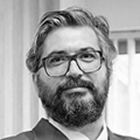
Tomohiro Otsuka
Tohoku University, Japan
Invited – Workshop 4: Nanographenes and related 2D-based nanostructures
Tomohiro Otsuka is an Associate Professor at the Advanced Institute for Materials Research and the Research Institute of Electrical Communication, Tohoku University. He received his Ph.D. in Physics from the University of Tokyo in 2010. After working as a postdoctoral researcher at the University of Tokyo, he joined the RIKEN Center for Emergent Matter Science as a Researcher. Since 2018, he has been an Associate Professor at the Research Institute of Electrical Communication, Tohoku University, and in 2022, he also became an Associate Professor at the Advanced Institute for Materials Research. His research focuses on the physical properties of artificial solid nanostructures and their applications in quantum devices, including two-dimensional materials. He has received several awards, including the Young Scientist Award from the Physical Society of Japan (2017), the Young Scientists’ Prize from MEXT Japan (2018), and the Tohoku University Distinguished Researcher Award (2020, 2023).
|
|
|
|
|
 |
| KEYNOTE |
|
|
| . |
|
|
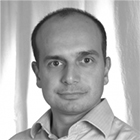
Barbaros Ozyilmaz
NUS, Singapore
Keynote – Plenary Session
Professor Barbaros Özyilmaz is best known for his work on developing new device applications based on 2D materials such as graphene, black phosphorus, and monolayer amorphous carbon (MAC). He graduated in 1999 from RWTH Aachen University, Germany, with his Diplomarbeit in Physics at the European High Magnetic Field Laboratory of the Max-Planck-Institute in Grenoble, France. He undertook his PhD studies (1999-2004) with Prof Andrew Kent at New York University in collaboration with IBM pioneering spin transfer torque. He did his postdoctoral work (2004-2007) at Columbia University in Prof Philip Kim’s group pioneering graphene research in the USA. He joined the Physics Department at NUS in 2007 as an Assistant Professor and was instrumental in establishing Graphene Research in Singapore. He is currently the Deputy Director of the NUS Centre for Advanced 2D material (CA2DM) and has greatly contributed to establishing NUS as one of the globally leading Centre’s for 2D material research. Since 2019 he is also the Department Head of the Materials Science and Engineering Department at NUS. He is the recipient of numerous awards including the NRF Fellowship and the NRF Investigator Award, NUS Young Investigator Award and the Institute of Physics Award, Singapore.
|
|
|
|
|
 |
| INVITED |
|
|
| . |
|
|
Vincenzo Palermo
CNR-ISOF, Italy
Invited – Plenary Session
Vincenzo Palermo is the director of the CNR Institute for Organic Synthesis and Photoreactivity (ISOF) in Bologna, Italy, and associated professor of Chalmers University of Technology (Sweden). He uses nanotechnology and supramolecular chemistry to create new materials for electronics, aerospace and biomedical applications. He published >200 scientific articles on international journals in chemistry, nanotechnology and materials science (>11 000 citations, h-index 53), collaborating with key industrial partners in Europe (Airbus, FCA, Leonardo, BASF, Nokia, STMicroelectronics etc.). He has been awarded the Lecturer Award for Excellence of the Federation of European Materials Societies (FEMS), the Research Award of the Italian Society of Chemistry (SCI) and the Science dissemination awards of the Italian Book Association.
|
|
|
|
|
 |
| WORKSHOP 5 |
|
|
| . |
|
|
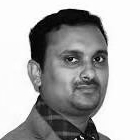
Shruti Pandey
ANSYS, India
Invited – Workshop 5: Photonics, Plasmonics, Phononics, 2D Magnetism and Spintronics
I completed my B.Tech. in Electronics and Communication Engineering from NIT Raipur in 2020. Following this, I joined the Defence Research and Development Organisation (DRDO) as a Research Fellow at PXE, where I worked on advanced radar systems.
In 2022, I began my integrated MS–PhD program with the CPPICS group at IIT Madras, focusing on SPICE-compatible modeling and simulation of microring modulators (MRMs) for photonic integrated circuits (PICs).
I am currently a Senior Engineer at Ansys, where I contribute to the Optics team, bridging photonic device research with industry-scale simulation technologies.
|
|
|
|
|
 |
| WORKSHOP 2 |
|
|
| . |
|
|
Premlal Pillai
University of Manchester, UK
Invited – Workshop 2: 2DM Chemistry and composites
Dr. Premlal Balakrishna Pillai is a Research Fellow at the University of Manchester working at the interface of molecular transport, membrane science, and translational water technologies. He is the co-founder and CEO of Hollowgraf Ltd., a deep-tech spin-out commercialising advanced membrane solutions for industrial and societal applications.
An internationally recognised innovator, he received the Global Prize for Innovation in Water (GPIW) 2025 and was named Researcher of the Year 2025 at the University of Manchester. His work has also been recognised by the Masood Entrepreneurship Centre (UK) and the Khalifa Innovation Centre (UAE).
Dr. Pillai has secured competitive research funding, authored 30+ peer-reviewed publications and book chapters, and is a named inventor on filed intellectual property. His career combines research excellence, innovation leadership, and impactful translation of membrane technologies.
|
|
|
|
|
 |
| WORKSHOP 7 |
|
|
| . |
|
|
Rakhi Raghavan Baby
CSIR-NIIST, India
Invited – Workshop 7: Energy Applications of 2D Materials
Dr. Rakhi R.B. is a Principal Scientist at the Centre for Sustainable Energy Technologies, CSIR–NIIST. She obtained her MSc in Physics (First Rank) from the University of Kerala and her PhD in Physics from IIT Madras with the Best Thesis Award. She carried out postdoctoral research at King Abdullah University of Science and Technology (KAUST), Saudi Arabia, and previously served as a UGC Assistant Professor at the University of Kerala. She is a recipient of the Ramanujan Fellowship (2016), SABIC International Postdoctoral Fellowship (2013–2014), MRSI Medal (2024), and Woman Achiever in Science Award (2025). She was featured in the CSIR Women Achievers in STEM compendium (2023) and is listed among the world’s top 2% scientists by Elsevier–Stanford for seven consecutive years (2019–2025). She has authored over 100 peer-reviewed publications with more than 10,000 citations and an h-index of 45. Her research interests include functional nanomaterials, 2D layered materials, energy storage devices, electrocatalysis, and electrochemical sensors
|
|
|
|
|
 |
| KEYNOTE |
|
|
| . |
|
|
Stephan Roche
ICREA / ICN2, Spain
Keynote – Plenary Session
Prof. Stephan Roche is a theoretician with more than 25 years’ experience in the study of transport theory in low-dimensional systems, including graphene, carbon nanotubes, semiconducting nanowires, organic materials and topological insulators. He has published more than 250 papers in journals such as Nature, Review of Modern Physics, Nature Physics, Nano Letters and Physical Review Letters and he is the co-author of the book titled “Introduction to Graphene-Based Nanomaterials: From Electronic Structure to Quantum Transport” (Cambridge University Press, 2020-second edition). He received the qualification to supervise PhD students from the Université Joseph Fourier (Grenoble, France) in 2004, and since then he has supervised more than ten PhD students and about 25 postdoctoral researchers in France, Germany and Spain. In 2009 Prof. Roche was awarded the Friedrich Wilhelm Bessel Research Award by the Alexander Von-Humboldt Foundation (Germany) and, since 2011, he has been actively involved in the European Graphene Flagship project as deputy leader of the Spintronics Work Package (WP). He is serving as leader of this WP since April 2020 and will continue until March 2023. He is also Division Leader of the Graphene Flagship.
|
|
|
|
|
 |
| INDUSTRIAL FORUM |
|
|
| . |
|
|
Auroprakash Rout
Tata Steel Limited, India
Invited - Industrial Forum
|
|
|
|
|
 |
| INVITED |
|
|
| . |
|
|
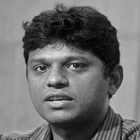
Mohammed Y Safirulla
India AI mission, MeitY, India
Invited – Plenary Session
|
|
|
|
|
 |
| WORKSHOP 5 |
|
|
| . |
|
|
Prasana Kumar Sahoo
IIT Kharagpur, India
Invited – Workshop 5: Photonics, Plasmonics, Phononics, 2D Magnetism and Spintronics
Dr. Sahoo is an Asst. Prof. at the Materials Science Centre, IIT Kharagpur, where he leads the Quantum Materials and Device Research Laboratory (QMDrL). His research focuses on 2D quantum materials, van der Waals heterostructures, excitons, and next-generation optoelectronic and quantum devices. He received his PhD in Physics from HBNI/IGCAR, DAE, India, with a Gold Medal for Outstanding Thesis. He has held research positions at the University of Cambridge (UK), University of South Florida (USA), and the University of Campinas (Brazil), and served as a Visiting Professor at EPFL, Switzerland. He has published in leading journals including Nature, Advanced Materials, ACS Nano, and Nano Letters. He currently leads several major projects under India’s National Quantum Mission and DST Nano Mission. His work bridges fundamental science and technology development in quantum and optoelectronic materials.
|
|
|
|
|
 |
| WORKSHOP 7 |
|
|
| . |
|
|
Rahul R Salunkhe
IIT Jammu, India
Invited – Workshop 7: Energy Applications of 2D Materials
|
|
|
|
|
 |
| WORKSHOP 7 |
|
|
| . |
|
|
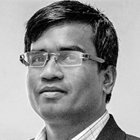
Chandra Sekhar Rout
JAIN University, India
Invited – Workshop 7: Energy Applications of 2D Materials
Prof. Chandra Sekhar Rout is a distinguished full professor at the Centre for Nano and Material Sciences (CNMS), Jain University. He was elected as the fellow of the Royal Society of Chemistry (FRSC) in London, UK in 2024. Before joining CNMS, he was a DST-Ramanujan Fellow at IIT Bhubaneswar, India, from 2013 to 2017. Prof. Rout earned his B.Sc. (2001) and M.Sc. (2003) degrees from Utkal University and completed his Ph.D. at JNCASR, Bangalore, in 2008 under the mentorship of Prof. C.N.R. Rao, Bharat Ratna awardee. He pursued postdoctoral research at the National University of Singapore (2008–2009), Purdue University, USA (2010–2012), and UNIST, South Korea (2012–2013).
|
|
|
|
|
 |
| WORKSHOP 1 |
|
|
| . |
|
|
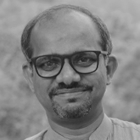
Debarun Sengupta
Shiv Nadar Institution of Eminence, India
Invited – Workshop 1: Sensors and Biomedical Applications
Currently, I am working as an Assistant Professor at the Department of Electrical Engineering, Shiv Nadar Institution of Eminence, Delhi NCR. I am actively working on establishing a research track in bio-inspired wearables and Organ-on-chips. My goal is to converge the principles of microsystems fabrication with next generation additive manufacturing techniques to develop advanced Organ-on-chips systems and wearable electronics for inexpensive accessible health care. In addition, I am jointly holding a position as a visiting Research fellow with the University of Groningen, The Netherlands.
|
|
|
|
|
 |
| WORKSHOP 7 |
|
|
| . |
|
|
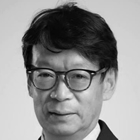
M. M. Shaijumon
IISER Thiruvananthapuram, India
Invited – Workshop 7: Energy Applications of 2D Materials
Prof. Shaijumon obtained his M.Sc in Physics from St. Thomas college (University of Calicut, India) and Ph.D in Physics from Indian Institute of Technology Madras. He spent more than 3 years in the United States as a postdoctoral research fellow at Rensselaer Polytechnic Institute, Troy, New York and Rice University, Houston, Texas. Later he spent nearly a year and half as a senior postdoctoral researcher at Paul Sabatier University, Toulouse, France. He joined IISER Thiruvananthapuram as an Assistant Professor in School of Physics in 2010. In 2017, he got promoted to Associate Professor and currently he has been appointed as Professor, since 2023.
|
|
|
|
|
 |
| KEYNOTE |
|
|
| . |
|
|
Takashi Taniguchi
NIMS / MANA, Japan
Keynote – Plenary Session
Takashi Taniguchi is a Fellow and director of research center for Materials Nanoarchitectonics (MANA) at National Institute for Materials Science (NIMS). He obtained his PhD in materials science at Tokyo Institute of Technology in 1987. That same year, became an Assistant Professor in the Department of Inorganic Materials Engineering, Tokyo Institute of Technology. Joined the National Institute for Research in Inorganic Materials (NIRIM) in 1989 (reorganized into the NIMS in 2001). Since obtaining his degree, he has consistently engaged in materials synthesis research under ultra-high pressure, particularly focusing on developing techniques for synthesizing high-purity nitride single crystals using reactive solvents under high pressure. Recipient of the 2018 Japan Society of High Pressure Science and Technology Award; 2023 James C. McGrady New Materials Award (American Physical Society); 2024 Japan Ceramics Grand Prize ; 2025 Asahi Prize, Tsukuba Prize, and Medal with Purple Ribbon in Japan.
|
|
|
|
|
 |
| INDUSTRIAL FORUM |
|
|
| . |
|
|
Sushmitha Veeralingam
INL, Portugal
Invited - Industrial Forum
Sushmitha Veeralingam is an Application & Systems Integration Engineer at International Iberian Nanotechnology Laboratory (INL) Portugal, working within the 2D Materials & Devices group. She earned her PhD from the Indian Institute of Technology Hyderabad (IITH), India. She worked as a research fellow at the National Institute for Materials Science (NIMS), Tsukuba, Japan, and as a postdoctoral researcher at Sungkyunkwan University, South Korea, where her work focused on developing scalable and sustainable two‑dimensional TMDCs and integration into flexible electronic applications. Her research interests also include developing advanced device applications such as wearable sensors, biosensors, optoelectronic devices, and hybrid nanogenerators using 2D TMDCs.
|
|
|
|
|
 |
| INDUSTRIAL FORUM |
|
|
| . |
|
|
Sunita Verma
MeitY, India
Invited - Industrial Forum
Mrs Sunita Verma is Group Coordinator for R&D in Electronics & IT at Ministry of Electronics & IT looking after the R&D activities. She has been playing a crucial role in development & promotion of Electronics and IT across the country by way of formulation of policies, evolving R&D proposals, their deployment and commercialization in association with industries, academia and R&D organisations. She has long association of more than 30 years dealing in R&D work from basic research to product development.
She was also heading the National Supercomputing Mission for development and deployment of state-of-the-art Supercomputing facilities in the country. She was instrumental in creation of state-of-the-art VLSI labs across the country and initiated several successful programs like Special Manpower Development Programme and Chips to Startup Programme. Some of the major initiatives being led by her are NaMPET, ITS, MRI, Ultrasound, e-Mobility, Microprocessor Development Programme, Quantum Computing, Blockchain, Artificial Intelligence, Machine Learning, and thrust on capacity building through – C2S, iNUP, Visweshwarya PhD Scheme
|
|
|
|
|
| |